


Amid Trade Sanctions, Huawei Highlights China’s Supply Chain Strength and Resilience
While it is hard to describe Huawei Technologies as “thriving” under US sanctions, it can be said with confidence that the Shenzhen-based smartphone and telecommunications equipment giant has survived Washington’s trade restrictions.
According to privately held Huawei’s latest financial data, the company’s revenue in the first half of 2024 was about similar to its revenue in the same period in 2019 before the trade sanctions started affecting its operations. The United States government added Huawei to its trade blacklist in May 2019.
Although there are more questions than answers about Huawei’s present technological capabilities, particularly its closely guarded information related to semiconductors, there is no doubt that the company has made much progress in its tech self-sufficiency efforts in spite of US restrictions.
In August last year, the release of Huawei’s Mate 60 Pro 5G handset – powered by an advanced, locally made 7-nanometre processor – surprised the global smartphone industry for that chip breakthrough under US sanctions. Speculation has swirled that Huawei’s Mate 70 series, expected to be released in the fourth quarter, will use a more advanced 5-nm chip.
The revival of Huawei’s 5G smartphone business shows to a certain extent the resilience of China’s manufacturing supply chain. What Huawei accomplished could well be the tip of the iceberg for the mainland’s supply chain transformation under various tech and trade restrictions.

The progress in China’s tech self-sufficiency efforts has, in turn, helped mainland enterprises, industry researchers and Beijing’s policymakers to re-evaluate the country’s advantages in the global manufacturing supply chain.
There are now fresh discussions about how China can build a secure and efficient supply chain, while maintaining its central role in global trade amid so-called Western friendshoring and de-risking initiatives.
One Chinese book on the topic – Supply Chain Offence and Defence, written by industrial development expert Lin Xueping – has become popular since it was published last year. Lin asserted in his book that supply chain systems have transcended commercial competition to become part of a rivalry between nations.
According to the book, China can counterbalance the key technological advantages of the US by leveraging its “power to connect”, which describes the mainland’s extensive relations on the back of its vigorous manufacturing processes.
Even though China continues to face choke points in gaining access to advanced semiconductors and the cutting-edge lithography machines to mass-produce such chips, mainland enterprises can still develop highly efficient supply chains for specific products.
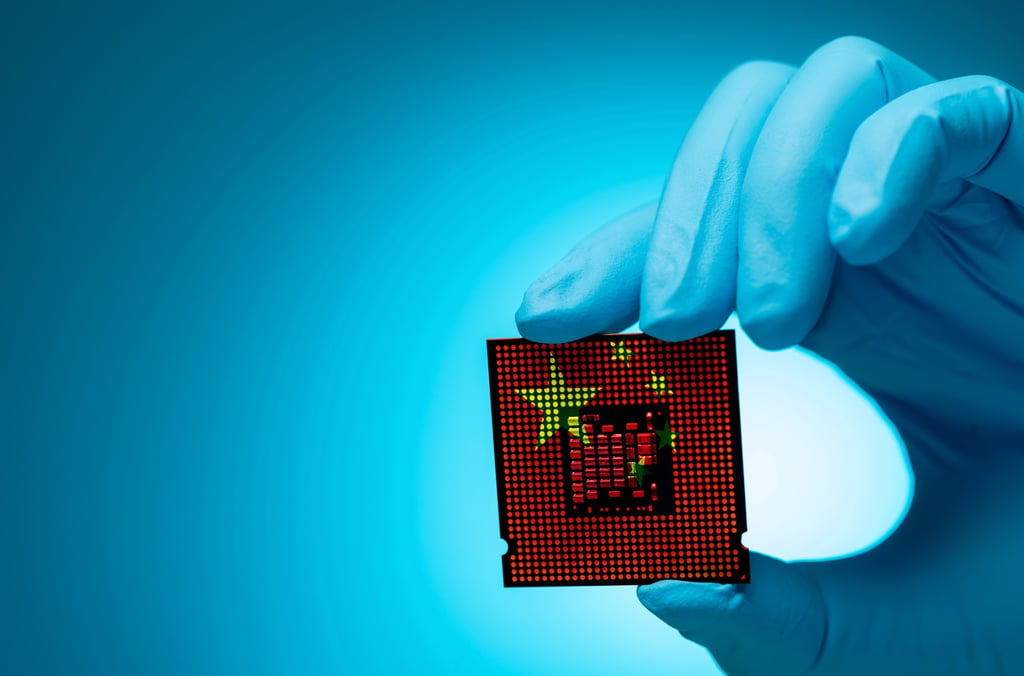
The mainland continues to make strides in terms of design capabilities and production capacity for so-called legacy chips – older-generation semiconductors made with 28-nm or larger etching technology – that are used in automobiles and home appliances.
Even without the latest artificial intelligence (AI) chips from Nvidia, China has not slowed down in building smart computing infrastructure for various AI development projects.
Previously, China attempted to “empty the nest to change the bird” – phasing out labour-intensive, low-end manufacturing – for high value-added businesses. But the escalation of a complex trade war and tech rivalry with the US, along with a global supply chain disruption during the pandemic, showed that such a phase-out was too idealistic and naive.
China has come to realise that its vast manufacturing apparatus is an enviable asset amid global trade tensions.
What has emerged as the real threat to the mainland’s long-term supply chain security is the development of China-style manufacturing supply systems in countries like Vietnam and India, according to author and industrial development expert Lin. In his book, he cited as example how Foxconn Technology Group’s female workers at its factories in India have already matched the skills of Chinese workers in assembling smartphones like Apple’s iPhone.
There may be differing views on how China can balance its supply chain security and efficiency goals, but there is already a consensus on the mainland that the country must stay embedded in global supply networks, as competition in this field goes deeper than the oversimplified choke-point issues raised in news media.


Hey there You have done a fantastic job I will certainly digg it and personally recommend to my friends Im confident theyll be benefited from this site
Wow amazing blog layout How long have you been blogging for you made blogging look easy The overall look of your web site is magnificent as well as the content